How Often Should You Clean a Grease Trap?
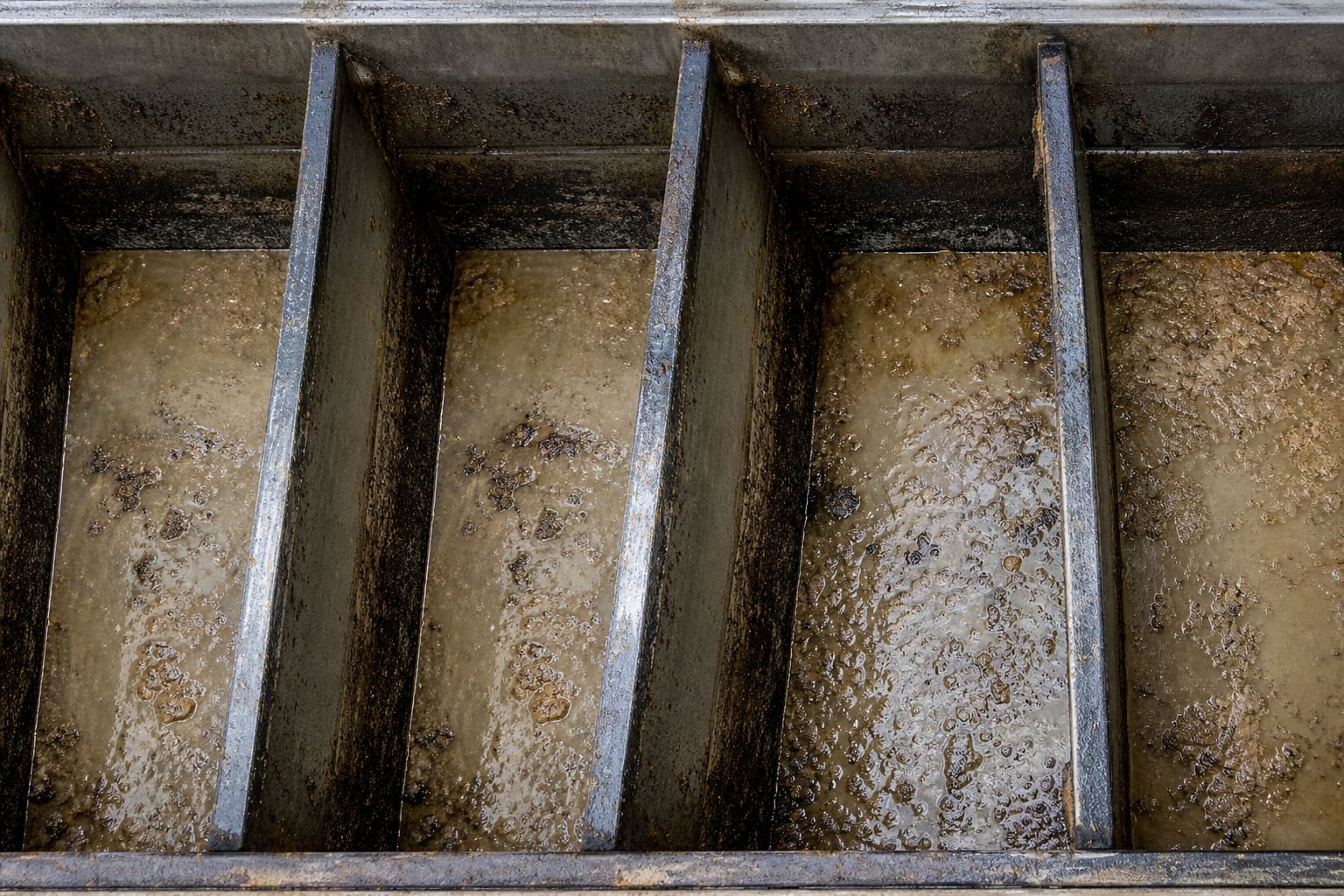
Ops managers ask for a single number: monthly, quarterly, or “whenever it smells”. The right grease trap cleaning interval is how fast your kitchen loads fats, oils, and grease into the unit — and what it costs you if you wait too long.
What drives cleaning frequency
A quiet café with light frying is not the same job as a city-centre restaurant turning covers six days a week. Menu mix matters: deep-fried specials, butter-heavy sauces, and busy breakfast grills fill traps faster. Trap size and condition matter too — an undersized or neglected unit pushes grease into the drainage line sooner.
If you are guessing from a chart, start with a kitchen drainage survey instead.
Signs you are leaving it too long
Slow sinks, floor-drain gurgles, persistent odours near the trap, and FOG visible at the outlet are late warnings. By the time service is disrupted, you are already paying in kitchen time. Scheduled grease trap cleaning is cheaper than emergency jetting mid-Friday.
A practical York approach
We set intervals after seeing the trap, the menu, and access constraints — then adjust after the first few visits. City-centre basements and hotel kitchens often need tighter cycles than suburban cafés. Operators in York city centre and Clifton often share access limits that make planned visits more useful than reactive call-outs.
Documentation helps
Keep service records with dates, what was removed, and any outlet concerns. Landlords, facilities managers, and insurers increasingly expect evidence that FOG is managed, not ignored.
A cleaning schedule only works if it matches your kitchen — not a neighbour’s.
When you are ready to set a cadence that fits your covers, book a grease trap clean or request a kitchen drainage survey first.